
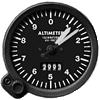
 SPGs
for diving are available with an aviation style face similar to the
altimeter pictured at right. This type of face was adopted when
aircraft began flying night missions and the instrumentation needed to
be illuminated. A large expanse of white on the instrument panel
reflected too much light, impacting night vision and flight safety.
Thus the instrument face colors were reversed, in order to reduce
reflected light and to protect the night vision of the pilot. Modern
aircraft instruments also incorporate their own lighting, to eliminate
the glare of external lighting reflecting from their covers.
SPGs
for diving are available with an aviation style face similar to the
altimeter pictured at right. This type of face was adopted when
aircraft began flying night missions and the instrumentation needed to
be illuminated. A large expanse of white on the instrument panel
reflected too much light, impacting night vision and flight safety.
Thus the instrument face colors were reversed, in order to reduce
reflected light and to protect the night vision of the pilot. Modern
aircraft instruments also incorporate their own lighting, to eliminate
the glare of external lighting reflecting from their covers.
When done properly, any type of luminescent dial SPG, white or black face, can be read in all light conditions, even low or no light conditions. To read your SPG in low or no light conditions, don't try to read the indications while shining your light at the face. Instead, hold your dive light directly against the SPG face for a moment, then move the light away. Now you can look at the gauge to easily read the SPG using only the back-light luminescence of the face, absent any reflected light or glare and without affecting your night vision.