
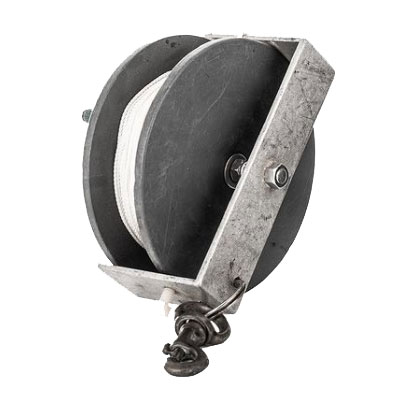
The first cave diving reels were characterized by lantern style handles that hold the reel vertically. This classic design is simple and works reasonably well for cave diving, but has the disadvantage that the handle is an open ended Γ-shape. The open end of the inverted L makes it an entanglement hazard and the lantern style handle also does not scale up well for very large reels. As cave explorations were becoming longer, deeper, and more extensive, a reel was needed that could help an explorer make some serious penetrations into a virgin cave system. The original sidewinder-style reel was designed by legendary North Florida cave diver Woody Jasper. He first used the sidewinding style design when inventing his large "explorer reel" around 1980. Less likely to entangle than other reels on the market, Woody’s original reel was made of aluminum and a PVC spool, see the photo of an example. The side-handle style of the reel lent itself to exploration because it could easily switch from hand to hand while laying out line. Twenty years later, sidewinder-style reels were popularized in the technical diving community when DIR aficionados began using them for paying out line in deep caves at high speed on a DPV. Today, sidewinding style reels with a closed handle have become the standard for serious cave divers.